Link building you can show your CTO without flinching
Editorially earned links from sites with real readers, pointed at pages that deserve them, with the full source list in every report.
For any company whose pages already deserve to rank and need authority to get there, and for agencies that want a link partner they can put in front of their own clients.
Updated
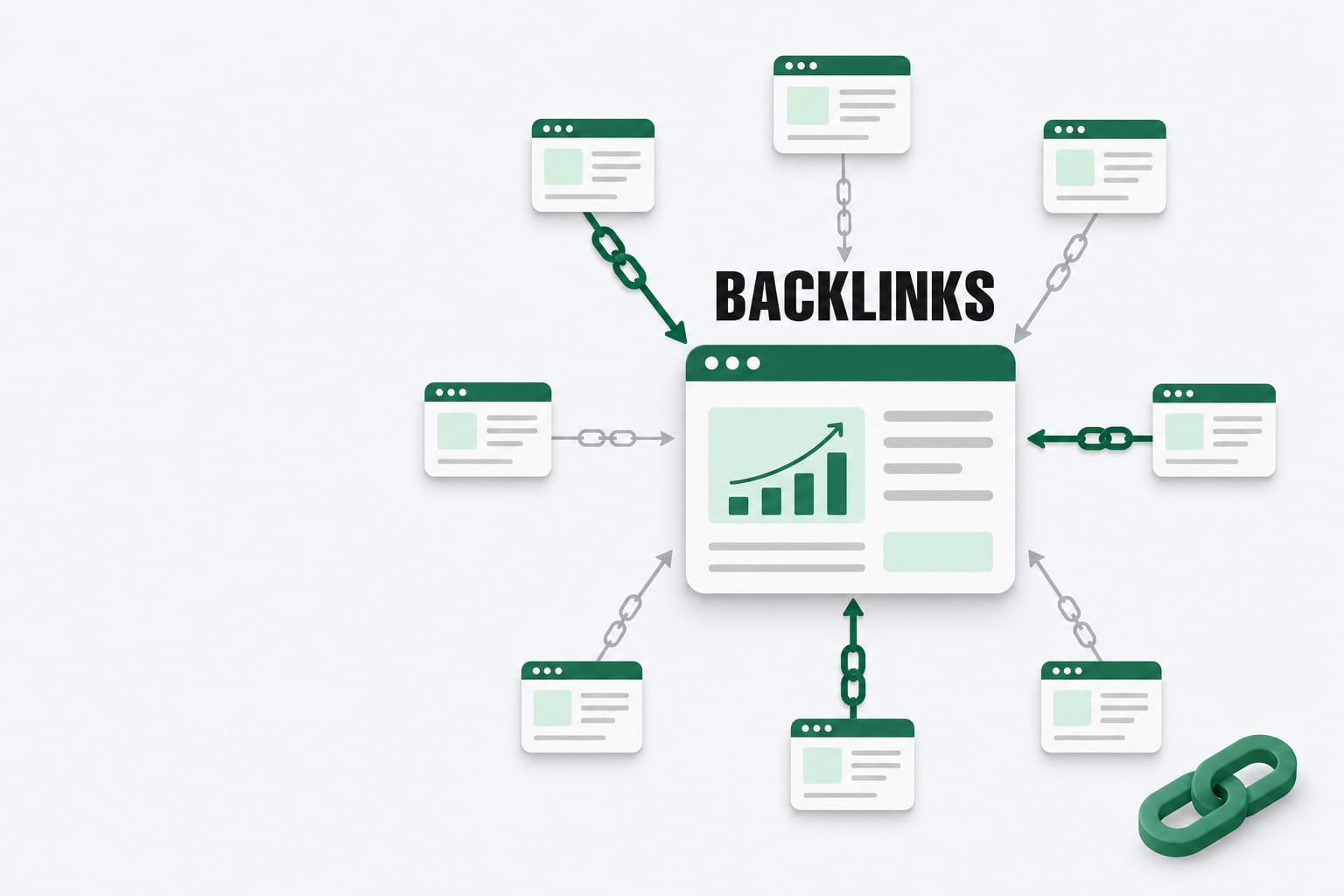
What is a link building service, and what is included?
Link building at Seorythm means acquiring links from other websites to yours through methods a journalist or editor would recognise as legitimate: digital PR campaigns built on original data or expert comment, editorial outreach to publications that cover your category, resource page placements where your content genuinely belongs, reclaiming mentions of your brand that never linked, and occasional guest contributions on sites with an editorial process and real traffic. Each month you receive the target list before outreach starts, the placements secured with the URL, anchor text, and how the placement was obtained, and a link health check for links earned in earlier months. What is excluded is anything that depends on hiding the transaction: private blog networks, link farms, expired-domain networks, hacked or injected links, and paid placements presented as editorial. If a site accepts payment, the report says so and the placement is marked as sponsored where the publisher requires it.
What you get
| Deliverable | Cadence | What it includes |
|---|---|---|
| Link profile audit | Week 1 | Current links reviewed for risk and gaps, anchor text distribution, competitor link intersection. Disavow recommendation only if warranted. |
| Target page selection | Month 1, revisited quarterly | Which pages should receive links, based on ranking position, commercial value, and whether the page is actually good enough to earn a link. |
| Prospect list for approval | Monthly, before outreach | Sites we intend to approach, with fit and traffic notes. You can veto any of them. |
| Placements | Monthly target set in roadmap | Live URL, anchor text, target page, acquisition method, and whether any fee was involved. |
| Anchor text policy | Set once, reviewed quarterly | Written distribution across branded, naked URL, topical, and partial-match anchors. Exact-match commercial anchors are rationed. |
| Link health report | Monthly | Earned links re-checked for removal, nofollow changes, and page deletion. Lost links within the replacement window are replaced. |
How the work is done
Acquisition methods, in order of how much we use them
Digital PR comes first. We find a story your company can legitimately tell (a data set you already hold, a pattern your team sees in customer work, a considered position on a debate in your category) and pitch it to journalists and editors who cover that subject. One good campaign can earn a dozen links from publications you would be pleased to list on your homepage.
Editorial outreach comes second. We find pages that already discuss your topic and would be better with a reference to your content, then write to the editor with a specific, honest reason. Resource pages and industry directories with editorial review are part of this.
Unlinked mention reclamation is third and is the closest thing to free money in SEO. Your brand or product is mentioned somewhere without a link; we ask for one. Conversion rates are high because the editor already knows who you are.
Guest contributions are last and rationed. A guest article on a site with an editor, a real audience, and a subject that fits yours can be a good link; a guest article on a site that exists to publish guest articles is not. We only place them on the former and we tell you which placements they are.
What we refuse, and why it matters to you
We do not use private blog networks, link farms, expired-domain networks, hacked or injected links, or paid placements presented as editorial. Every one of those is named in Google’s spam policies on link spam. The reason is practical rather than moral: these links are the ones Google’s spam systems are built to detect, and when they are detected the penalty lands on your domain, not ours. A link profile you cannot explain to your CTO or your next agency is a liability you carry after the contract ends.
If you want to check any vendor’s work, including ours, read how to evaluate backlink quality. It is the same checklist we use on our own placements.
Anchor text policy
Anchor text is distributed across four types: branded (your company or product name), naked URL, topical (a phrase describing the page without the commercial keyword), and partial match. Exact-match commercial anchors are limited to a small share of new links and only used where the surrounding text makes them natural. The policy is written down at the start of the engagement and you can change it. Anchor text is one of the two signals (velocity is the other) that most often separates an earned profile from a purchased one, so we treat it as policy rather than preference.
Reporting format
Each monthly report lists every placement with the live URL, the anchor text, the page it points to, the acquisition method, and whether any fee changed hands. Paid placements carry the rel="sponsored" attribute Google asks for in its guidance on qualifying outbound links, and where a disavow is warranted we use Google’s disavow tool only for the clear manipulative patterns it was built for. It also lists the links from earlier months that we re-checked and their status. The report is a spreadsheet and a short written summary, and you can share both with anyone. Links are pointed at pages that our on-page SEO work has already made worth linking to; if you are buying links alone, we will still tell you when the target page is the weak link.
Link building is one part of the full SEO programme. If you are starting from scratch, audit your existing link profile first. If you already know what you need, per-link pricing is public.
What it costs
Per placement by tier, or a monthly campaign fee for digital PR
Outreach and resource-page links are priced per placement in three tiers based on the linking site's traffic and editorial standard, from $180 (tier 1) through $280 to $320 (tier 2) to $480 to $720 (tier 3). Digital PR runs from $1,200 a month because the output depends on the story, not a placement count. Each figure is 20% below the published price of the comparable tier at the large link vendors; the comparison is on the pricing page.
What moves the number
- Linking site tier (traffic, topical fit, editorial process)
- Whether original research or data must be produced for the campaign
- How competitive your category is with journalists
- Volume commitment per month
Who this is not for
- Sites with unresolved technical or content problems. Links to pages that cannot rank are wasted money, and we will say so after the audit.
- Buyers who want a fixed number of links per month at the lowest price per link. Volume-first buying is how profiles end up full of sites nobody reads.
- Anyone who wants exact-match commercial anchors on every link.
- Categories we cannot place ethically: gambling, payday lending, adult, and unregulated financial products.
- Businesses that need us to hide that we are working for them. Outreach is done in your name or with your permission.
Risks and how we manage them
| Risk | How we manage it |
|---|---|
| Links look unnatural because of velocity or anchor patterns. | Monthly volume is set relative to your current profile and competitors, not a flat quota. Anchor text follows a written distribution and exact-match commercial anchors are limited to a small share. |
| A linking site deteriorates after placement (sold, repurposed, deindexed). | Monthly health checks flag it. If the link was earned within the replacement window and the site fails our standard, we replace it at no charge. |
| A paid placement is treated as an editorial link by Google. | We disclose fees in the report and follow publisher sponsorship rules, including rel="sponsored" where the publisher applies it. We never present a paid placement as earned. |
| Outreach damages your brand with journalists or peers. | Prospect lists are approved by you before we send anything. Outreach is factual and from a named person, with no templated flattery, and we stop after two follow-ups. |
| Manual action or algorithmic devaluation from legacy links. | The initial audit assesses your existing profile. We recommend a disavow only when there is a clear pattern of manipulative links, because over-disavowing causes its own damage. |
How do you judge whether a backlink is worth having?
We score a prospective linking site on five things before outreach starts. Topical fit: does the site actually cover your subject, or is it a general blog that covers anything for a fee? Real traffic: does the site have organic search visitors in a third-party tool, and does the specific page or section rank for anything? Indexing: are its recent pages in Google's index, or does the site publish faster than Google indexes it? Editorial standard: is there a named editor, are contributor posts reviewed, and do outbound links point at reasonable places? Outbound link pattern: does the site link out to casinos, payday lenders, and essay mills next to the software or shops it also "reviews"? A site that fails topical fit or editorial standard is excluded regardless of its domain metrics. A high domain rating on a site that links to anything for money is the most common way a link profile ends up looking purchased.
Questions buyers ask
Do you buy links?
We do not buy links that are passed off as editorial. Some publishers charge an administrative or sponsorship fee for contributed content; when that happens, the fee is disclosed in your report and the publisher's sponsorship labelling is respected. You always know which placements involved money.
How much does link building cost?
Per placement, $180 for tier 1 sites, $280 to $320 for tier 2, and $480 to $720 for tier 3 press placements; digital PR campaigns run from $1,200 a month. Each figure is 20% below the published price of the comparable tier at the large link vendors, and the comparison is on the pricing page. A typical first month for a competitive category is 6 to 10 placements.
What is your replacement policy for lost links?
Links that go dead, are removed, or switch to nofollow within the replacement window stated in your agreement are replaced with an equivalent-tier link at no charge, provided the loss was not caused by changes to your page.
Do you offer white-label link building for SEO agencies?
Yes. Reports can be delivered unbranded, and outreach is still done transparently, in the end client's name or ours, never through a fake persona. SaaS and ecommerce sites are the most common end clients.
How many links do we need?
Fewer than most vendors will tell you. The number depends on the gap between your target pages and the pages currently ranking, which we measure in the audit. A handful of relevant links to a strong page often does more than dozens to a weak one.
What about off-page SEO beyond links?
Off-page SEO covers brand mentions, reviews, and citations as well as links. Unlinked brand mentions are part of this service. Review and citation management for local businesses is not something we offer.
Start with the audit.
Two weeks, fixed price, and a prioritised list you can act on with or without us. If SEO is not the right channel for you, the audit will say so.